International Travel Surge Protectors
A travel surge protector does one job: it helps protect electronics from voltage spikes. It does not change voltage, and it does not make a 120V appliance safe in a 230V country.
The short rule: read the input label before plugging anything in. A phone, laptop, camera charger, tablet charger, or USB charger marked Input: 100-240V 50/60Hz usually needs the correct plug adapter/adaptor, not a voltage converter. Surge protection does not correct the wrong voltage.
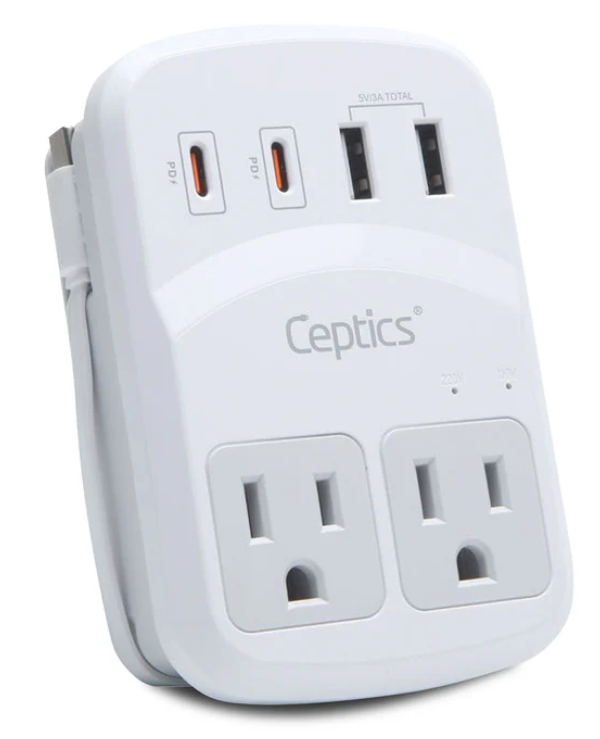
Recommended Surge-Protected Travel Adapter
Plug Adapter, Converter, and Surge Protector: Three Different Jobs
Plug adapter/adaptor
Changes the physical plug shape so the device fits the wall outlet. It does not change voltage.
Voltage converter
Changes voltage for a device that cannot accept the local electrical supply.
Surge protector
Helps protect compatible electronics from voltage spikes. It must be rated for the voltage where it is used.
Dual-voltage charger
A charger marked 100-240V, 50/60Hz can be used with the correct plug adapter/adaptor.
Can You Use a US Surge Protector in Europe?
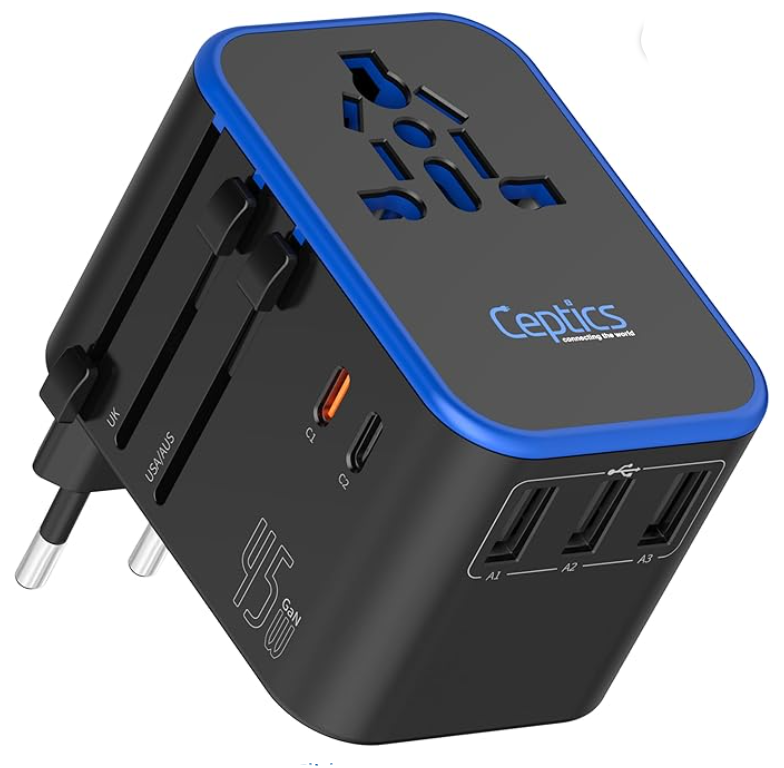
Do not use a US-only surge protector or power strip in Europe or another 220V, 230V, or 240V region unless its label clearly says it is rated for that voltage. Many household US surge strips are designed only for 120V or 125V.
A common mistake is to use the correct plug adapter with a power strip from home and assume the power strip is now safe to use. The plug fits, but the voltage rating can still be wrong.
How to Read the Label
Look for the input rating on the charger, power strip, surge protector, or appliance. It may be printed in very small type near the cord or on the power brick.
- Input: 100-240V 50/60Hz is generally suitable for worldwide voltage with the correct plug adapter/adaptor.
- Input: 120V 60Hz is not suitable for 220-240V power without an appropriate voltage converter.
- Output ratings do not tell you whether the product can accept foreign wall voltage; read the input line.
- USB ports do not automatically make a product internationally compatible; check the product's input rating.
When a Voltage Converter Is the Real Issue
Voltage converters matter most with single-voltage appliances, especially high-wattage heating products such as some hair dryers, curling irons, flat irons, steamers, heating pads, and small kitchen appliances.
Phones, laptops, cameras, tablets, and USB chargers are commonly dual voltage. Hair dryers and other appliances often are not, so check the input label.
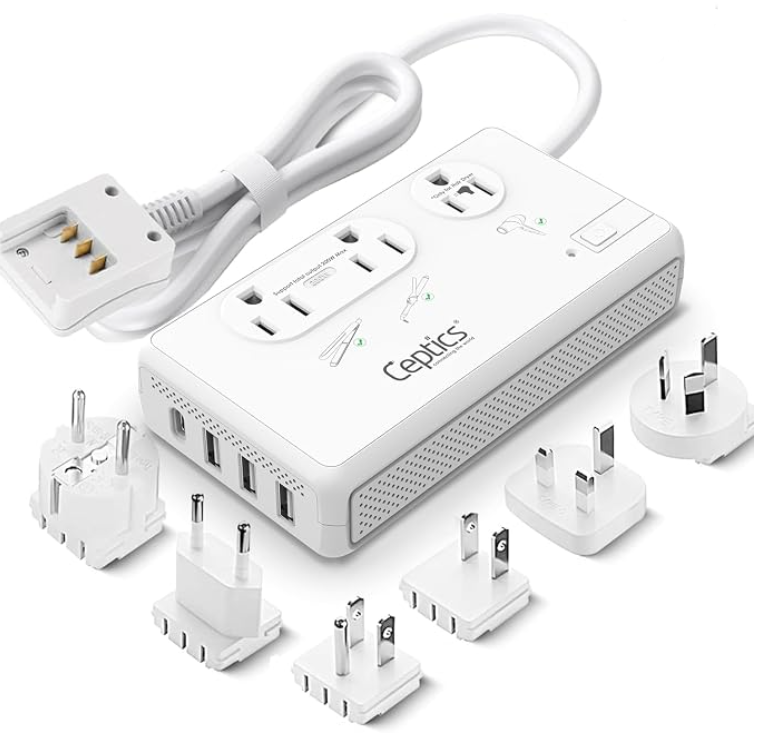
International Travel Surge Protector Questions
Can I use a US surge protector in Europe?
Do not use a surge protector or power strip rated only for 120V or 125V in 220V, 230V, or 240V countries. Use equipment specifically rated for the local voltage or for 100-240V input.
Does a surge protector convert voltage?
No. A surge protector helps limit voltage spikes. It does not convert 230V power to 120V, and it does not make a single-voltage appliance safe overseas.
Is a universal travel adapter the same as a surge protector?
No. A universal travel adapter or adaptor changes plug shape. Some travel adapters include surge protection, but a basic plug adapter does not provide surge protection and does not change voltage.
Do I need surge protection for international travel?
Check voltage compatibility first. Surge protection is separate. Devices labeled 100-240V generally only need the correct plug adapter/adaptor or an internationally rated travel power product.
Quick Checklist Before Packing
- Check every charger's and device's input voltage .
- Bring the correct plug adapter/adaptor for each country.
- Use only surge protectors and power strips rated for the local voltage.
- Do not use a 120V-only power strip in a 220-240V country.
- Use a voltage converter only when the device cannot accept the local voltage.
- Take extra care with heating appliances.