
International Travel Tips
A dead phone, the wrong plug, missing medication, or a hotel address trapped in an app can wreck the first day of a trip. Keep the few items that prevent those problems in your carry-on and within reach.
Recommended International Travel Adapter
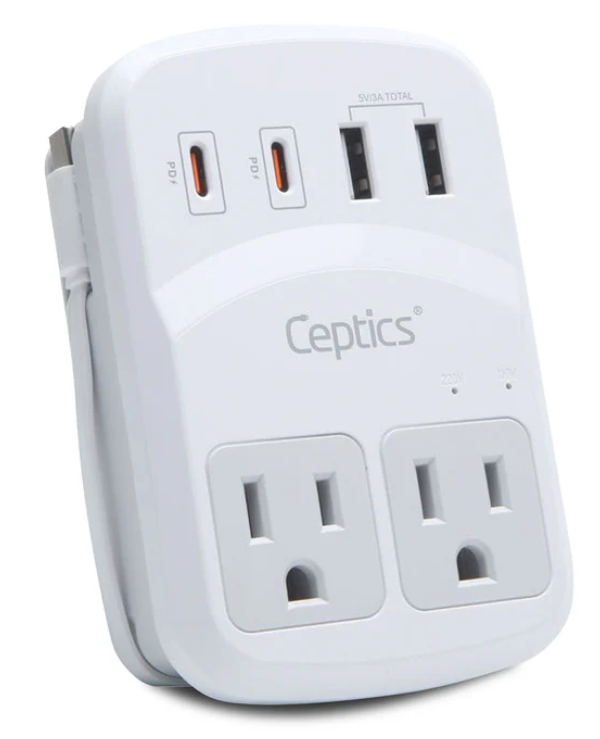
This Ceptics kit combines regional plug adapters with AC, USB-A, and USB-C charging. It is for compatible electronics marked for 100-240V input; it does not convert voltage.
- Multiple international plug types
- Multiple AC outlets
- USB-A and USB-C ports
- For 100-240V dual-voltage electronics
Recommended Travel WiFi
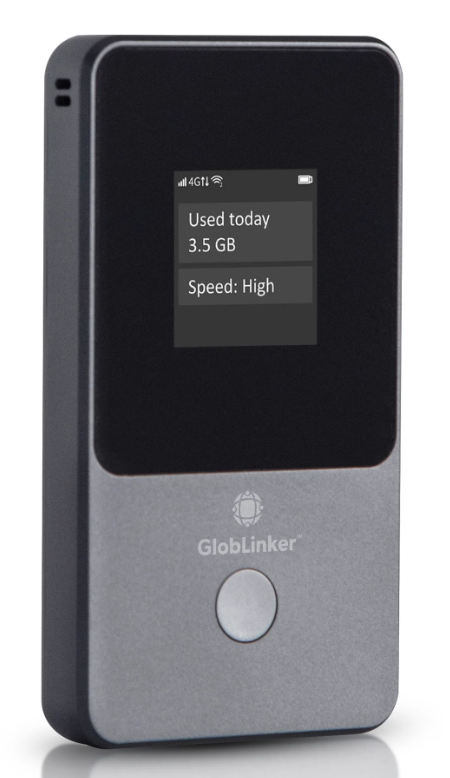
Globlinker automatically connects to the strongest available local mobile network. Use it in the U.S. and 130+ countries without a SIM, contract, subscription, or roaming fees.
For adapter selection and surge protection, see how to buy the right travel adapter and international travel surge protectors . For phone and laptop connections, see getting online while traveling overseas .
Pack a first-night pouch
Put your main travel adapter , one charging cable, basic toiletries, and the first dose of any scheduled medication in one thin pouch at the top of the carry-on. Keep the rest of your essential medication in the carry-on too. After a long flight, you should not have to empty the suitcase before you can charge the phone, take medication, and go to bed.
- Keep the pouch at the top of the carry-on
- Use it for the items needed immediately after arrival
- Return those items to the pouch before every travel day
Check voltage and plug type before packing
Look up the destination's voltage and wall-plug shape before choosing adapters and chargers. A plug adapter changes the physical plug shape; it does not change voltage. Read the input label on every charger and appliance before packing it. Use the country power guide for every country on the itinerary.
- Match the adapter to every country on the itinerary
- Confirm that chargers say 100-240V before using them overseas
- Leave single-voltage heating appliances home unless you have the correct equipment
For the full explanation of adapters, voltage, converters, and dual-voltage equipment, see Solving the Riddle of International Electricity .
Carry the cables you actually use
Put every device on a table before the trip and match it to a cable. Two USB-C cables, one older USB-A cable, and one multi-port charger often replace a pouch full of duplicates. Label the charger that serves both the laptop and phone so it does not stay behind in a hotel outlet.
- Pack one working cable for each connector type
- Carry one spare for the phone's cable
- Store chargers and cables together
Separate room gear from day-bag gear
A small power strip, sink stopper, cable lock, and spare chargers belong with the hotel gear. A power bank, rain shell, compact lock, passport copy, and daily medication belong in the day bag. Keeping those groups separate stops the unpack-and-repack cycle that leads to forgotten gear.
- Carry power banks in the aircraft cabin, never in checked baggage
- Remove the power bank before a carry-on bag is checked at the gate
- Protect it from damage and short circuits
Make the trip survivable without your phone
Print the hotel name, street address, reservation number, and next travel segment. Keep copies of passports and other travel documents separate from the originals, and leave another set with someone you trust. A dead or stolen phone should not erase the day's plan.
- Keep hotel addresses and reservation numbers offline
- Separate document copies from the originals
- Carry one payment card apart from the rest
Keep medication in the carry-on
Pack enough medication for the full trip plus extra for delays. Keep it accessible in the carry-on, bring copies of prescriptions, and use the original labeled packaging when possible. Medically necessary liquids can pass through TSA screening in quantities above the normal liquid limit, but they must be declared for screening.
- Carry the full trip supply rather than only the first-night dose
- Pack extra medication for travel delays
- Keep prescription copies with the medication
Build a sleep kit for long travel days
Test the neck pillow before the trip. Add an eye mask and earplugs if light and cabin noise keep you awake. Keep the complete sleep kit at the seat instead of trapping it in the overhead bin after boarding.
- Test the pillow before packing it
- Choose one that fits inside or clips securely to the carry-on
- Keep the sleep kit within reach at the seat

Blast from the Past: Walkabout Travel Tips
From the back cover of a Walkabout Travel Gear catalog from 1996, these reader-submitted tips show how some travel advice stays useful, while others are the equal to dinosaur handling instructions.
Battery Advice
When traveling with battery operated devices -- always start with fresh new batteries, test them in the device they will be used with and THEN leave the batteries in but reverse one. This will assure that the batteries are where they belong and that they won’t be dead when needed.
--Paul Matthews
Make Copies
Make a note of not only the 800 numbers to report stolen credit cards, but the collect numbers as well, because 800 numbers do not work in foreign countries. It is also a good idea to carry one credit card separately from the rest -- in case the others are stolen you’ll still have access to ATM machines, etc.
--Julie Towery
Don’t be a Hunger Artist
Don’t leave home without instant soup, ramen noodles or a can of tuna; you never know when you’ll be stuck somewhere without the correct currency. It may not fill you up completely but it will help tide you over for a while. A small set of camping dishes is also recommended.
--Jeni
Bloody Good Tip
Be aware that ”RH negative” and “O” types are not commonly stored in Mainland China.
--Mary Clark
Extra Photos
Carry extra passport photos. They are required if you lose your passport and it must be reissued.
--Thomas K. Moore
Phoning home from BFE
Find out how to use local telephones before you arrive in a new country. There is often a bewildering array of local codes, city codes, etc., that can turn a phone call into a nightmarish experience, especially if people are waiting in line. (Remember in poor countries public phones are public phones.) Also, some countries (Malta, for example) don’t use coins for their phones, only phone cards. Find what the phone procedures are before you arrive in a strange country.
--Mick Worthen
Shrink Your List
For your postcard list, type just first names, street addresses, and zip codes -- you probably know the last name and the city and it saves space. Then shrink the list on a copy machine to as small you can read it, and laminate it. Takes up just a tiny bit of space.
--Kay Brewer
Die, germs, die
A pocketful of individually wrapped alcohol pads are very handy and don’t take up much space.
--Dik Jensen
Barley pop the perfect food?
One of the safest liquids to drink in developing countries is beer. It is too acidic for microbes to live in. Also, it has very little fat and lots of liquid carbohydrates. In fact, it is liquid bread. To be safe, drink beer constantly.
--Del Hayes
Also good on steaks
When snorkeling or scuba diving, carry a small bottle of meat tenderizer. Meat tenderizer neutralizes jellyfish or Portuguese man-o-war stings.
--JB and Kim Anderson
Better Exchange Rate
You can usually get a better exchange rate by buying stuff with a credit card, rather than exchanging your cash. This is because credit card companies aggregate all their transactions and get a better rate than any one person could.
--Big Bill
Obvious and True
Take as much money as possible.
--Mark Sandstrom