
International Voltage by Country
Use this voltage-by-country index to check whether your destination uses 100V, 110–120V, 127V, or 220–240V mains electricity. A plug adapter (also spelled adaptor) changes the plug shape only. A voltage converter (also spelled convertor, though converter is the usual spelling) changes the voltage for single-voltage devices.
Check Your Device Label First
- 100–240V on the label: you only need a plug adapter. Most phone, tablet, and laptop chargers are like this.
- One voltage only, such as 120V: you need a voltage converter in 220–240V countries, or a dual-voltage replacement.
- 110V, 120V, and 127V: close enough that devices work in each other's countries. US devices generally run in Japan at 100V, though hair dryers and heaters run a little weaker.
Not sure what the numbers mean? See 110V vs 220V explained.
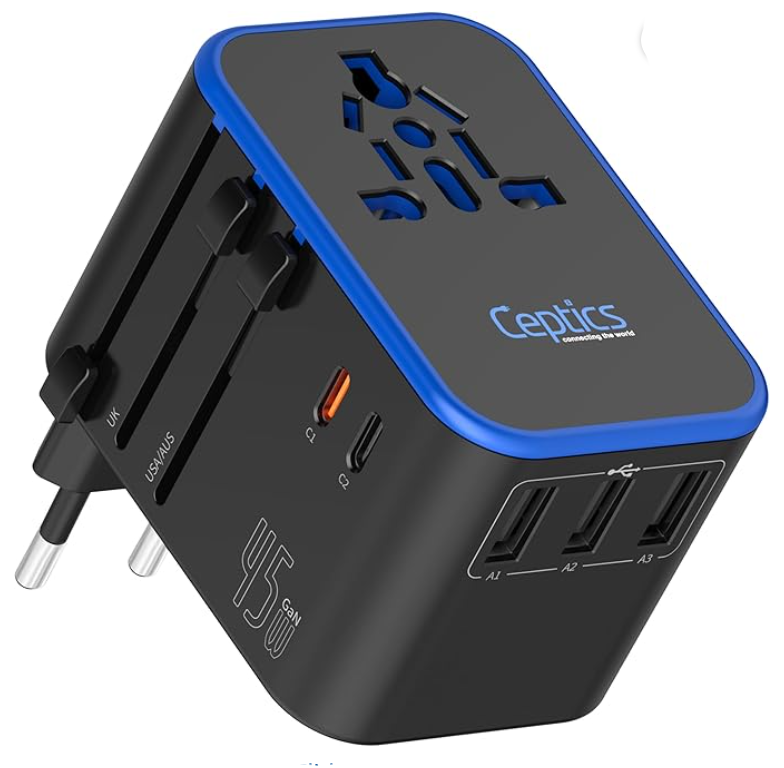
100V
110–120V
- American Samoa
- American Virgin Islands
- Anguilla
- Bahamas
- Barbados
- Belize
- Bermuda
- British Virgin Islands
- Canada
- Cayman Islands
- Colombia
- Costa Rica
- Cuba (Uses both 110V and 220V.)
- Dominican Republic
- Ecuador
- El Salvador
- Federated States of Micronesia
- Galápagos Islands
- Guam
- Guatemala
- Haiti
- Honduras
- Jamaica
- Marshall Islands
- Nicaragua
- Northern Mariana Islands
- Palau
- Panama
- Puerto Rico
- Saba
- Saint Eustatius
- Sint Maarten
- Taiwan
- Trinidad and Tobago
- Turks and Caicos Islands
- U.S. Virgin Islands
- United States
- Venezuela
127V
Note: Countries listed as 127V are generally compatible with 110–120V appliances.- Aruba
- Bonaire
- Brazil (Uses both 127V and 220V.)
- Curaçao
- Mexico
- Netherlands Antilles (Former territory. Curaçao and Bonaire use 127V. Sint Maarten, Saba, and Saint Eustatius use 110–120V.)
- Suriname (Uses both 127V and 220V.)
220–240V
- Abkhazia
- Abu Dhabi
- Aceh
- Afghanistan
- Akrotiri and Dhekelia
- Åland Islands
- Albania
- Alderney
- Algeria
- Andorra
- Angola
- Antigua and Barbuda (Uses both 220V and 110V.)
- Arabian Peninsula
- Argentina
- Armenia
- Artsakh (Nagorno-Karabakh)
- Ascension Island
- Australia
- Austria
- Azerbaijan
- Azores
- Bahrain
- Bangladesh
- Basque Country
- Bavaria
- Belarus
- Belgium
- Benin
- Bhutan
- Bolivia
- Borneo
- Bosnia and Herzegovina
- Botswana
- Brazil (Uses both 127V and 220V.)
- Brunei
- Bukovina
- Bulgaria
- Burkina Faso
- Burundi
- Cambodia
- Cameroon
- Canary Islands
- Cape Verde
- Central African Republic
- Ceuta
- Chad
- Chile
- China
- Christmas Island
- Cocos (Keeling) Islands
- Comoros
- Congo
- Cook Islands
- Corsica
- Côte d’Ivoire (Ivory Coast)
- Crimea
- Croatia
- Cyprus
- Czech Republic
- Czechia
- Democratic Republic of the Congo
- Denmark
- Djibouti
- Dodecanese Islands
- Dominica
- Donetsk People’s Republic
- Dubai
- Durrës
- East Timor (Timor-Leste)
- Easter Island
- Egypt
- Equatorial Guinea
- Eritrea
- Estonia
- Eswatini
- Ethiopia
- European Russia
- Falkland Islands
- Faroe Islands
- Fiji
- Finland
- France
- French Guiana
- French Polynesia
- Gabon
- Gambia
- Georgia
- Germany
- Ghana
- Gibraltar
- Greece
- Greenland
- Grenada
- Guadeloupe
- Guernsey
- Guinea
- Guinea-Bissau
- Guyana (Uses both 220V and 110V.)
- Herzegovina
- Hong Kong
- Hungary
- Iceland
- India
- Indonesia
- Inner Mongolia
- Ionian Islands
- Iran
- Iraq
- Ireland
- Isle of Man
- Isle of Wight
- Israel
- Italy
- Jersey
- Jordan
- Juan Fernández Islands
- Kazakhstan
- Kenya
- Kiribati
- Kosovo
- Kuwait
- Kyrgyzstan
- Laos
- Latvia
- Lebanon
- Lesotho
- Liberia
- Libya
- Liechtenstein
- Lithuania
- Luxembourg
- Macau
- Madagascar
- Malawi
- Malaysia
- Maldives
- Mali
- Malta
- Martinique
- Mauritania
- Mauritius
- Mayotte
- Moldova
- Monaco
- Mongolia
- Montenegro
- Montserrat
- Morocco
- Mozambique
- Myanmar
- Namibia
- Nauru
- Nepal
- Netherlands
- New Caledonia
- New Zealand
- Niger
- Nigeria
- Niue
- Norfolk Island
- North Korea
- North Macedonia
- Northern Cyprus
- Norway
- Oman
- Orkney Islands
- Pakistan
- Palestine
- Papua New Guinea
- Paraguay
- Peru
- Philippines
- Pitcairn Islands
- Poland
- Portugal
- Qatar
- Republic of the Congo
- Réunion
- Romania
- Russia
- Rwanda
- Sahrawi Arab Democratic Republic
- Saint Helena
- Saint Kitts and Nevis
- Saint Lucia
- Saint Pierre and Miquelon
- Saint Vincent and the Grenadines
- Samoa
- San Marino
- São Tomé and Príncipe
- Saudi Arabia
- Scotland
- Senegal
- Serbia
- Seychelles
- Sierra Leone
- Singapore
- Slovakia
- Slovenia
- Solomon Islands
- Somalia
- South Africa
- South Korea
- South Sudan
- Spain
- Sri Lanka
- Sudan
- Suriname (Uses both 127V and 220V.)
- Svalbard and Jan Mayen
- Sweden
- Switzerland
- Syria
- Tajikistan
- Tanzania
- Thailand
- Timor-Leste
- Togo
- Tokelau
- Tonga
- Tunisia
- Turkey
- Turkmenistan
- Tuvalu
- Uganda
- Ukraine
- United Arab Emirates
- United Kingdom
- Uruguay
- Uzbekistan
- Vanuatu
- Vatican City
- Vietnam
- Wales
- Wallis and Futuna
- West Bank
- Western Sahara
- Yemen
- Yugoslavia
- Zambia
- Zanzibar
- Zimbabwe
No Public Power Grid
Uninhabited territories, remote islands, and research or military stations. Station power follows the operating country.- Aksai Chin
- Antarctica
- Ashmore and Cartier Islands
- British Antarctic Territory
- British Indian Ocean Territory
- French Southern and Antarctic Lands
- Heard Island and McDonald Islands
- Howland Island
- Jan Mayen
- Jarvis Island
- Johnston Atoll
- Juan de Nova Island
- Kerguelen Islands
- Kingman Reef
- South Georgia and the South Sandwich Islands
- Wake Island
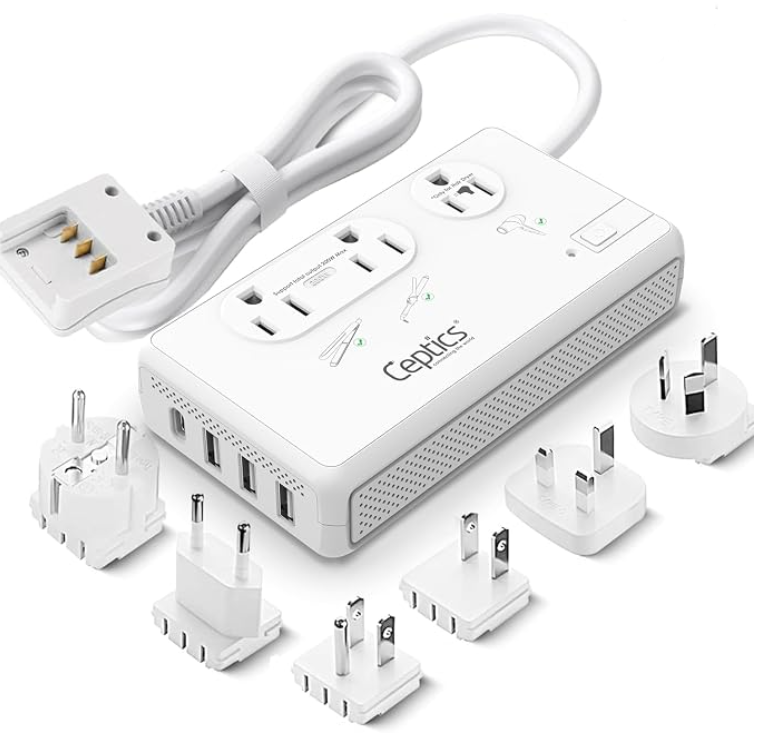
Volts and Hertz (50Hz vs 60Hz)
Voltage is only half of it. Mains power also alternates at either 50 or 60 cycles per second, measured in hertz (Hz). North America, much of South America, South Korea, Taiwan, the Philippines, and Saudi Arabia use 60Hz. Most of the rest of the world uses 50Hz.
For most travelers the frequency does not matter. Phone, tablet, camera, and laptop chargers marked 50/60Hz work on either. Frequency mostly affects plug-in clocks and timers, which can run fast or slow, and some appliances with motors. A voltage converter changes the voltage, not the frequency.
Japan uses both. Eastern Japan, including Tokyo, runs at 50Hz. Western Japan, including Osaka and Okinawa, runs at 60Hz. Outlets are 100V in both.
For more detail, see 110V vs 220V explained, dual-voltage appliances, and plug types A through O.
Travel WiFi for Longer Trips
Voltage Questions
What voltage does Europe use?
Almost all of Europe, including the United Kingdom and Ireland, uses 230V at 50Hz. Devices made only for 120V need a voltage converter unless they are dual voltage.
Can I use a 120V device in a 220–240V country?
Only with a voltage converter, or if the label says 100–240V. Plugging a 120V-only device into 230V with just a plug adapter can burn it out in seconds.
Do 110V and 120V devices work at 127V?
Yes. Mexico, Aruba, Curaçao, and Bonaire use 127V, and devices rated 110V or 120V generally work there without a converter.
Do I need a converter for my phone or laptop?
Usually not. Almost all phone and laptop chargers are rated 100–240V, so a plug adapter is enough. Check the small print on the charger to be sure.